
Melbourne’s Olympic venues leave a lasting legacy 70 years on
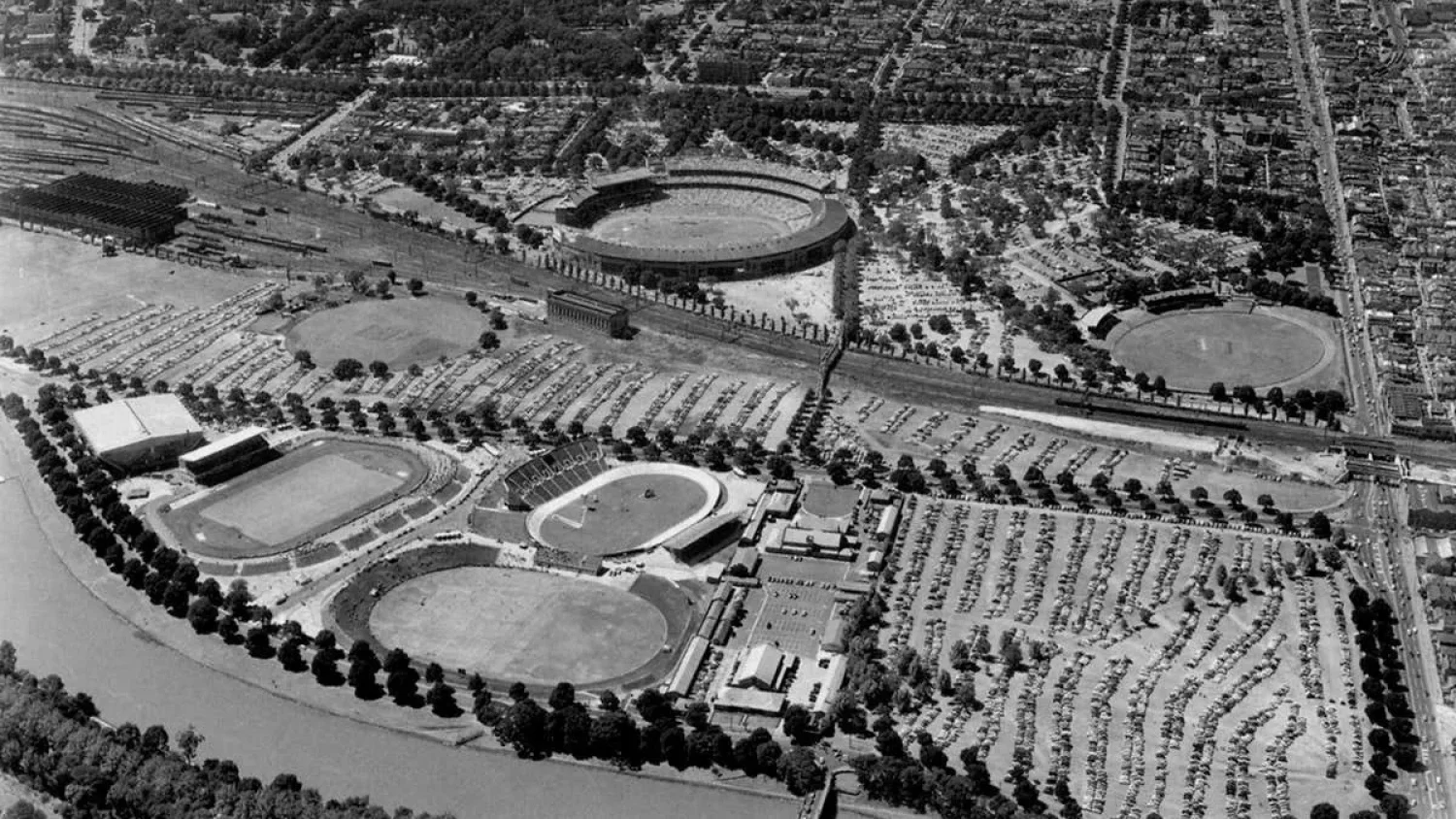
Seventy years after Ron Clarke carried the Olympic flame into the Melbourne Cricket Ground, the venues of the 1956 Games remain part of Australia’s sporting landscape, although some now serve very different purposes.
November 22 marked seven decades since Melbourne opened Australia’s first Olympic Games, bringing the world’s biggest sporting event to the Southern Hemisphere for the first time.
The anniversary brought 30 Olympians back to the MCG, including swimming great Dawn Fraser and members of the Australian athletics team, for celebrations organised by the Australian Olympic Committee.
For stadium fans, the milestone also provides an opportunity to trace what happened to the grounds, pools and indoor arenas that staged the Games, from the enduring MCG to an Olympic swimming stadium that became a basketball arena and then an AFL club’s headquarters.
The Melbourne Cricket Ground was the centrepiece, welcoming 103,000 spectators for the opening ceremony on November 22, 1956.
Clarke, then a 19-year-old emerging distance runner, lit the cauldron, John Landy took the Olympic oath and rower Merv Wood carried the Australian flag.
The stadium hosted track and field competition, the football and hockey finals, and both ceremonies. Its temporary athletics configuration provided the setting for Betty Cuthbert’s sprint double and relay gold, along with Shirley Strickland’s successful defence of her 80m hurdles title.

The combined football final and closing ceremony attracted 104,700 spectators, while the MCG recorded an aggregate attendance of 1,153,000 across the Games.
Australian football also featured as a demonstration sport. A Victorian Amateur Football Association side defeated a combined VFL and VFA amateur team 81-55 on December 7.
The Olympic Stand built for 1956 has since been replaced, with its name retained in the northern redevelopment completed ahead of the 2006 Commonwealth Games.
That later event returned a running track to the MCG, while Olympic football in 2000 had already given the ground a role in a second Australian Olympics. Its continued use for cricket, Australian football and major events has ensured the main stadium remained central to the city’s sporting life.
Across the railway lines, the former Olympic swimming stadium tells a different story of adaptation.
Built for swimming, diving and water polo, it staged the Olympic debuts of Dawn Fraser and Murray Rose, who helped Australia finish third on the medal table with 13 gold medals.
The building survived long after its original pool configuration disappeared. In 1983, the pool was filled in and replaced with a sports floor, creating the Melbourne Sports and Entertainment Centre.
Known as the Glasshouse, it became Melbourne's major basketball and concert venue before another transformation established it as Collingwood Football Club’s training and administration base.
Now known as the KGM Centre, the heritage-listed building remains a recognisable link between Melbourne’s Olympic past and its modern professional sporting precinct.
Nearby Olympic Park Stadium followed another path.
While Olympic track and field medals were decided at the MCG, Olympic Park provided a warm-up athletics facility and staged football matches. It subsequently became one of Australia’s best-known athletics grounds, hosting generations of local competitors and international stars.
Its later history included major athletics meetings, football and rugby league before the stadium closed in 2011. The site was subsequently transformed into Olympic Park Oval, used by Collingwood for training.
Other elements of the original precinct have also disappeared. The Olympic velodrome was demolished in the 1970s, while the former hockey ground site was absorbed into later redevelopment, with AAMI Park now occupying that part of the precinct.

The result is a sporting district that retains its Olympic identity despite substantial changes to the venues within it.
Beyond Olympic Park, some of the Games’ indoor settings remain familiar Melbourne landmarks.
West Melbourne Stadium hosted boxing and gymnastics before becoming Festival Hall. The building’s subsequent concert history has given it an enduring place in the city’s entertainment scene as well as its sporting heritage.
The Royal Exhibition Building precinct accommodated basketball, wrestling, weightlifting and modern pentathlon fencing. A purpose-built basketball annexe was later demolished, illustrating how an Olympic venue’s history can extend beyond the surviving landmark building.
The Games also reached outside central Melbourne. Ballarat’s Lake Wendouree staged rowing and canoeing and remains an active rowing venue, while sailing took place on Port Phillip Bay.
Not every Melbourne 1956 event was held in Australia. Quarantine restrictions meant the equestrian competition was staged separately in Stockholm, with the Swedish capital’s own Olympic stadium returning to Games duty.
Back at the MCG, the closing ceremony created a legacy that reached beyond venue infrastructure. Athletes entered together rather than remaining separated into national teams, following a suggestion from Melbourne teenager John Ian Wing.
The tradition became one of the defining memories of the “Friendly Games” and continues at Olympic closing ceremonies.
Today, the Australian Sports Museum at the MCG preserves objects from Melbourne 1956, including the original cauldron and Cuthbert’s medals, while statues and commemorative features around the ground maintain a visible connection to the event.
Seventy years later, Melbourne’s Olympic legacy can be found in a stadium still drawing enormous crowds, a swimming venue adapted for new generations of athletes, and familiar sporting sites whose original Olympic structures have disappeared.
For a closer look at the individual grounds and their Games roles, explore our guide to the stadiums used for the 1956 Melbourne Olympic Games.
Latest News
 AFL · 26 Nov 2026Builder to examine future expansion of Macquarie Point Stadium
 Concerts · 26 Nov 2026Surfers Music Hall unveiled as Gold Coast’s new 2,500-capacity venue
 Sponsorship · 25 Nov 2026Adelaide Entertainment Centre to become RAA Entertainment Centre
 AFL · 24 Nov 2026Macquarie Point Stadium cost estimate rises to $1.23 billion