
The major stadiums Australia never built
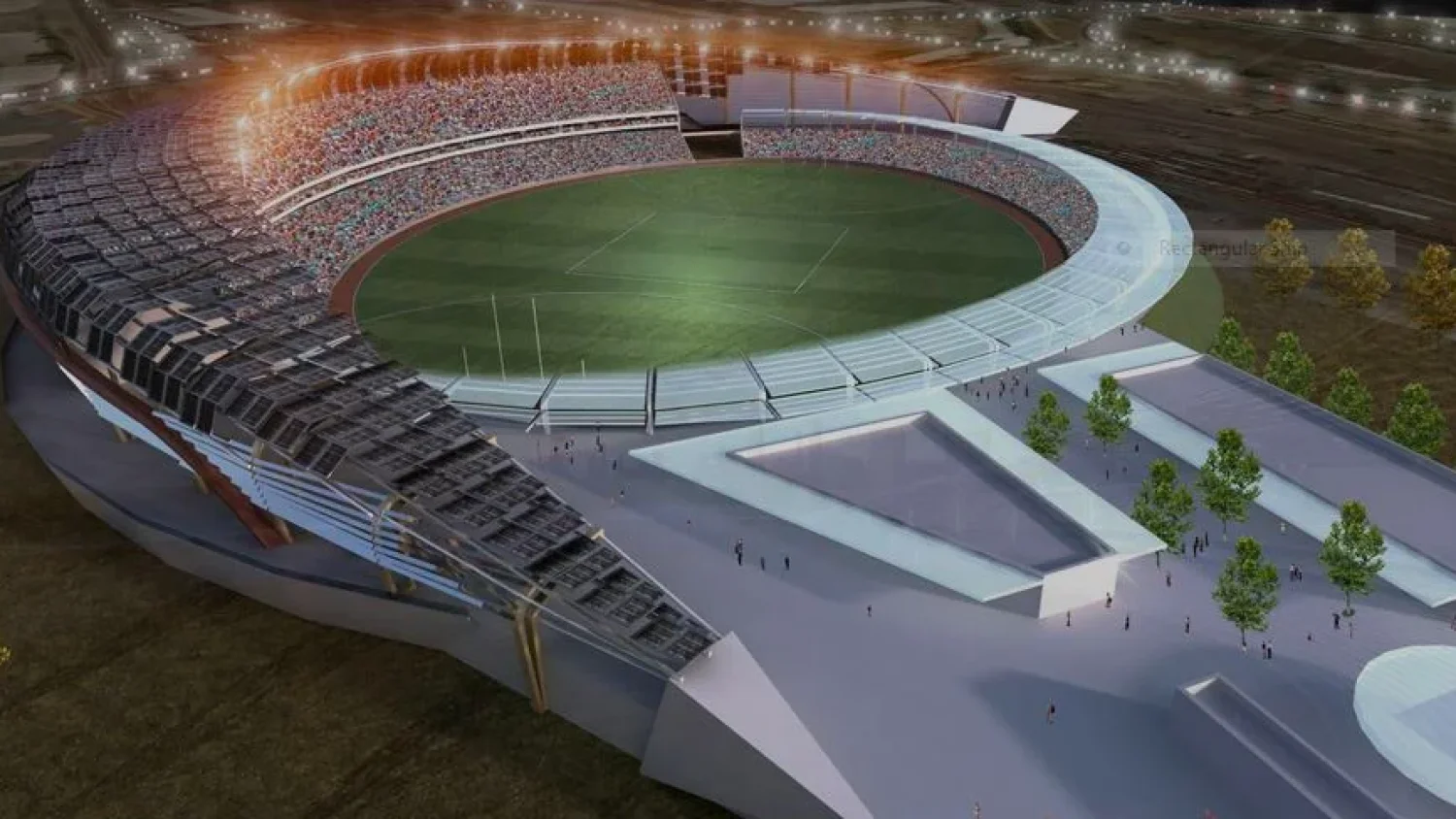
Australia’s sporting landscape could have looked very different if some of the country’s most ambitious stadium proposals had made it beyond the drawing board.
A 100,000-seat Olympic stadium at Melbourne's Princes Park, an enormous roofed venue at Melbourne Showgrounds and a riverside sporting precinct in Brisbane were among the projects put forward. Others promised new homes for professional clubs or depended on Australia securing the FIFA World Cup.
Some lost out to competing sites, others unravelled over funding and commercial arrangements. Here are ten major proposals that never became the venues their backers envisaged.
Melbourne Olympic Stadium
Proposed capacity: 100,000 at Princes Park | Era: early 1950s
Before the MCG became the centrepiece of the 1956 Olympics, Melbourne considered building its main stadium elsewhere.
The Showgrounds was initially proposed before attention turned to Princes Park. By 1952, Carlton’s home ground had emerged as the preferred location for a 100,000-seat Olympic stadium.
The redevelopment would have involved demolishing the Gardiner Stand and relocating Carlton’s home matches to Coburg during construction. However, rising cost estimates and a change in the MCG’s availability altered the outcome.
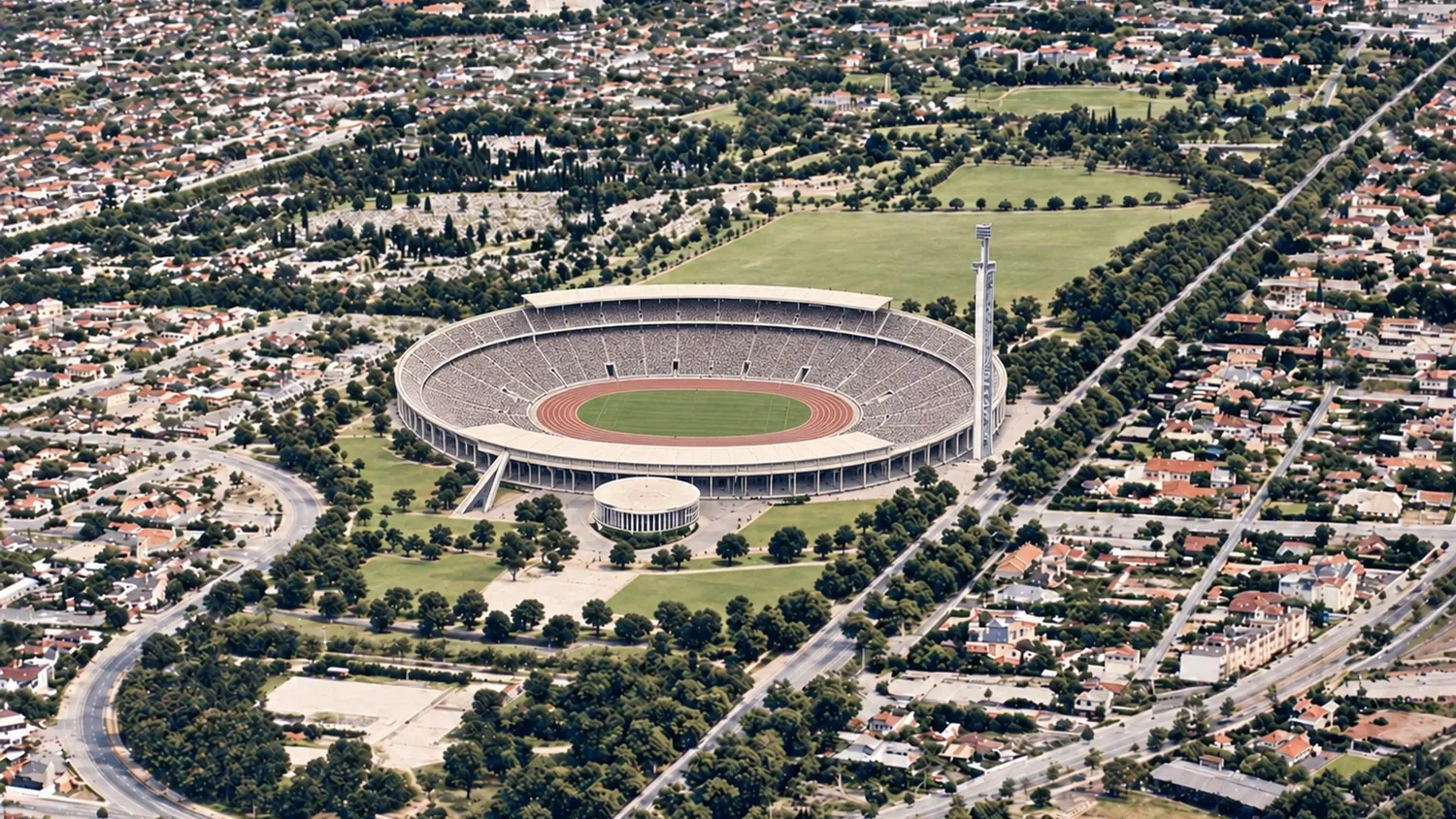
On 2 February 1953, the MCG was selected as the main Olympic venue. The Melbourne Olympic Stadium proposals were abandoned, with the new Olympic Stand instead built at the ground that hosted the Games.
Melbourne Showgrounds Stadium
Proposed capacity: 60,000 for AFL | Year: 1996
More than four decades later, the Showgrounds was again being considered for a major stadium.
The proposed $170 million venue was promoted as a replacement for Waverley Park, with Essendon supporting a Showgrounds home and the Western Bulldogs also expressing interest.
Designed by Peddle Thorp, the stadium would have provided covered spectator seating and a retractable roof over the playing arena. Plans included 162 corporate boxes, with capacity increasing from 60,000 for Australian football to as many as 80,000 for football and rugby league.
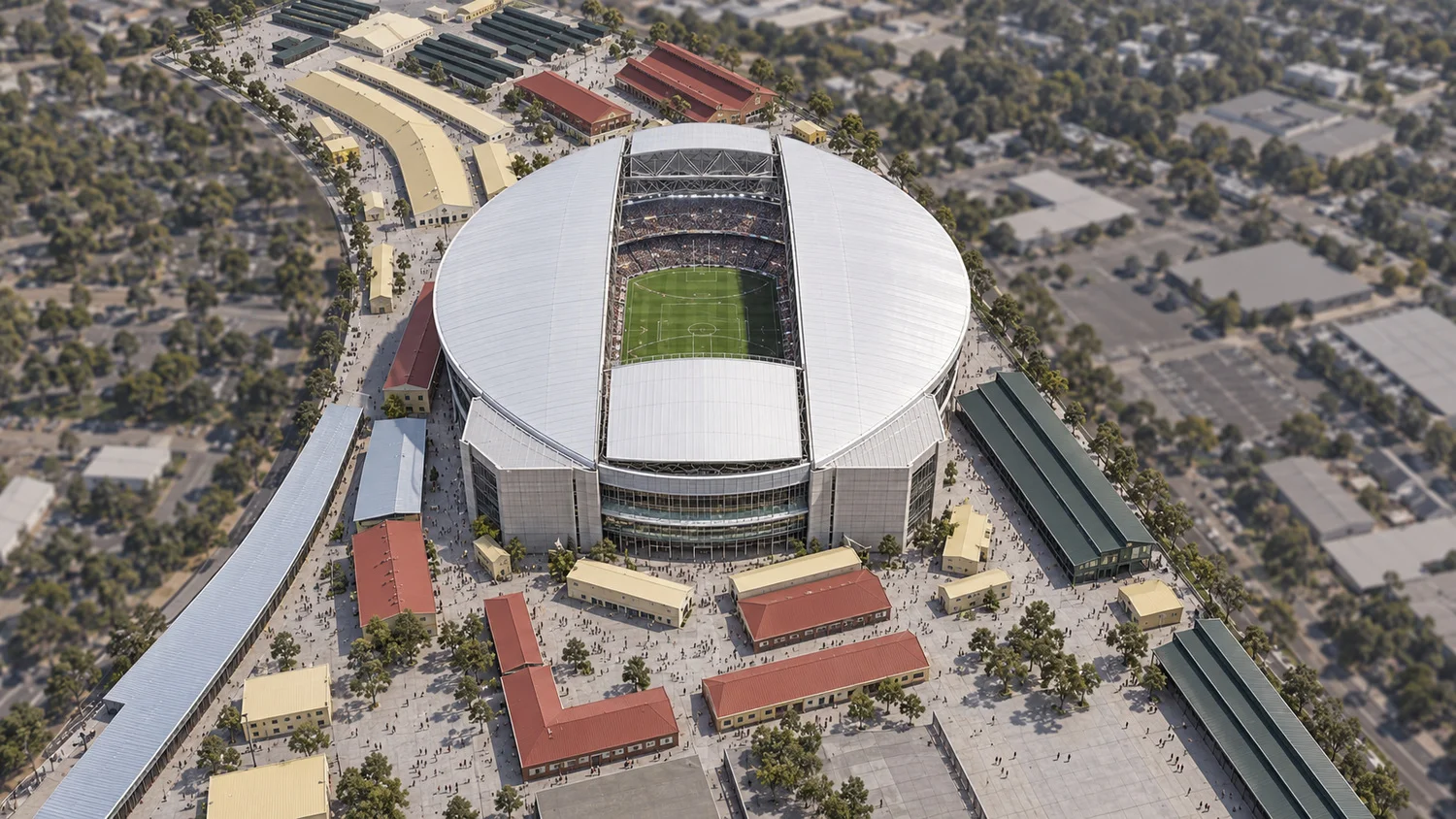
A subsequent development proposal added a hotel and monorail connection to the Maribyrnong River.
Ultimately, the Showgrounds stadium lost out to Docklands, where the 55,000-capacity Marvel Stadium (as we know it today) opened in 2000.
Rivercity Stadium, Brisbane
Proposed capacity: 65,000 | Year: 1998
Brisbane’s Hamilton riverfront was once earmarked for a sporting precinct anchored by a 65,000-seat rectangular stadium.
Unveiled in March 1998, Rivercity formed part of a proposed $900 million development across an 84-hectare site. The wider scheme included residential and commercial development, alongside an 8,000-seat tennis centre.

The main stadium was intended to accommodate rugby league, rugby union, football and hockey, giving Brisbane a larger venue to compete for major events.
Commercial development was intended to help offset construction costs, although traffic and the nearby airport flight path raised concerns.
The Rivercity Stadium proposal ended following the change of state government later that year. Brisbane’s major rectangular stadium investment subsequently centred on redeveloping Lang Park.
Liverpool’s Oasis sporting complex
Proposed capacity: 34,000 | Era: early 2000s
Liverpool’s Oasis project promised both a major rectangular stadium and an indoor arena at Woodward Park.
The 34,000-seat outdoor venue was intended to become home to the Canterbury Bulldogs, while also accommodating rugby union and football.
Alongside it, the proposed Oasis Arena would have provided 7,000 seats and a new home for the West Sydney Razorbacks basketball team. The arena alone was estimated to cost $33 million and was initially scheduled for completion in October 2002.

The broader development included leisure facilities and a water park. However, its commercial arrangements fell apart and the project became the subject of an Independent Commission Against Corruption investigation.
By June 2004, Liverpool Council was moving to terminate the remaining agreement, bringing the failed project to a close.
E-Gate Stadium, Melbourne
Proposed capacity: 27,000 | Era: from 2009
The proposed E-Gate Stadium addressed a different problem: finding a smaller Melbourne venue for AFL matches that did not require the capacity of the MCG or Docklands.
Railway land beside North Melbourne station was identified for a boutique ground accommodating approximately 27,000 spectators.

The concept also became linked to Australia’s football World Cup ambitions. A larger rectangular configuration accommodating around 44,000 was discussed, potentially allowing Docklands to remain available for Australian football during the tournament.
Neither version proceeded. The AFL continued to consider the merits of a smaller Melbourne stadium, but subsequently confirmed the E-Gate location had fallen off its radar.
Blacktown World Cup Stadium
Proposed capacity: 41,000 (26,000 legacy-mode) | Era: 2009-10
Australia’s unsuccessful World Cup bid included a purpose-built stadium at Blacktown in western Sydney.
The proposed venue would have accommodated approximately 41,000 spectators during the tournament before being reduced to around 26,000 for ongoing use.

That approach would have met the demands of hosting World Cup matches while leaving a more modest football stadium after the event.
Blacktown Stadium was one of the new venues included in the bid, alongside proposals for Canberra and Perth. However, Australia’s failure to secure the tournament removed the event around which the project had been planned, and the stadium was never built.
Hobart’s Elwick stadium
Proposed capacity: 30,000 | Year: 1997
Hobart’s search for a major new stadium predates the Macquarie Point project by decades.
In 1997, a 30,000-capacity venue was proposed for Elwick Showgrounds, with construction expected to begin in March 1998 ahead of the 1999 AFL season.
The design featured an MCG-sized oval, lighting and a sand-based playing surface. It was intended to accommodate AFL and international cricket, including replacing Bellerive Oval as Tasmania’s Test venue.
A $20 million first stage would have delivered 23,000 seats, including 11,000 undercover. A further $10 million stage would have added another 7,000 seats.
The Elwick stadium proposal never proceeded. Instead, Bellerive Oval and York Park were upgraded to accommodate AFL premiership matches.
Canberra’s World Cup stadium
Proposed capacity: 40,000 (27,000 legacy-mode) | Era: 2009-10
Long before the latest debate over a city stadium, Canberra’s World Cup plans envisaged a new rectangular venue at Bruce.
Rather than simply enlarging the existing ground, the proposal involved constructing a stadium beside it, with seating for approximately 40,000 during the tournament.

Capacity would then have been reduced to around 27,000, providing a smaller permanent venue for rectangular sports.
The World Cup stadium proposal was shelved following Australia’s unsuccessful bid in December 2010. It remains a separate chapter in Canberra’s stadium debate, distinct from the subsequent proposals for a roofed venue closer to the city centre.
Adelaide’s Bonython Park stadium
Proposed capacity: 45,000 | Year: 2008
In February 2008, then Adelaide United chairman Dario Fontanarosa unveiled plans for a $270 million football stadium on the fringe of Bonython Park.
Inspired by Frankfurt’s World Cup stadium, the proposal targeted land occupied by police barracks between Port Road and the River Torrens, with part of the development extending into the park.
The 45,000-seat venue would have formed part of a broader entertainment precinct incorporating a hotel, restaurants, shops and cinemas.
Fontanarosa had been developing the concept since visiting Germany during the 2006 World Cup, but acknowledged it would require government funding.
Austadiums reported the proposal at the time. The stadium never materialised, leaving Hindmarsh as United’s established home.
Adelaide’s City West stadium
Proposed capacity: 50,000 | Era: 2009-10
A separate Adelaide proposal emerged ahead of the 2010 South Australian election, with the state opposition promoting an undercover stadium at the city railyards.
The 50,000-seat venue formed part of a billion-dollar City West precinct plan, which also included cafes, shops and relocating the interstate rail terminal from Keswick.
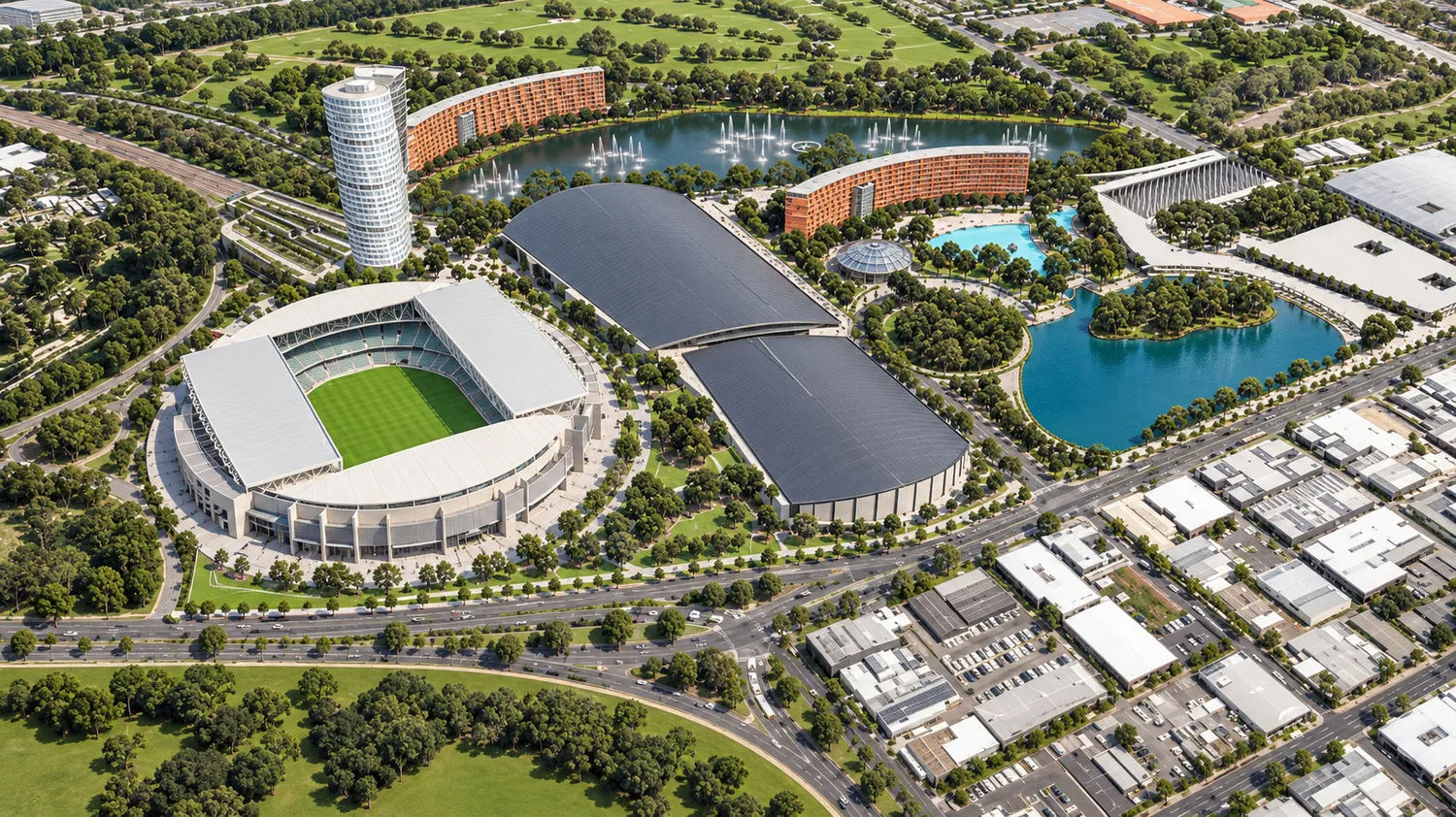
An entertainment centre and casino relocation were identified as possible later additions. Importantly, the billion-dollar estimate related to the wider development rather than the stadium alone.
The proposal competed with plans for a new Royal Adelaide Hospital on the railyards site and with the emerging redevelopment of Adelaide Oval.
The City West stadium was never built. Adelaide instead gained its major city-based football and cricket venue through the transformation of Adelaide Oval.
More unbuilt concepts, rejected designs and current projects can be explored in Austadiums’ proposed and rejected stadiums collection.
Latest News
 Austadiums · 27 Oct 2026Austadiums launches Crowd Predictor
 NRL · 26 Oct 2026Leichhardt Oval upgrade underway as historic ground closes for refurbishment
 Rugby Union · 26 Oct 2026MCG secures Bledisloe Cup return in 2027 under new Melbourne deal
 Motorsport · 26 Oct 2026Rain washes out Phillip Island’s final MotoGP race