Accor Stadium
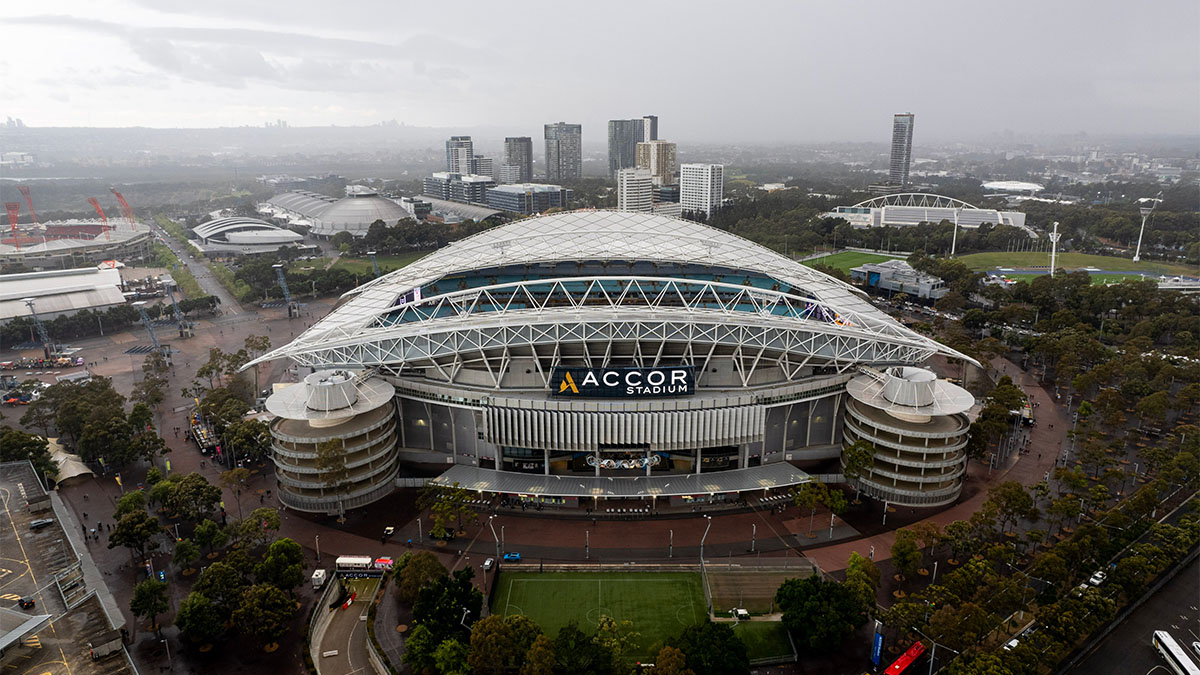
Accor Stadium, known non-commercially as Stadium Australia, is a 82,000-capacity stadium located at Sydney Olympic Park in the west of Sydney, Australia. Built to be the centrepiece of the Sydney 2000 Olympic Games, it now serves primarily as a rectangular sports and entertainment venue. No other outdoor stadium used for the Olympics had been bigger than Stadium Australia at the time of the games, with its 110,000 seating capacity.
Specially designed for the unique Australian environment, the stadium shades and protects the majority of spectators. Suspended from a huge arch structure and three hectares in area, the roof is constructed from translucent polycarbonate to minimise the shadows and patches of direct sunlight on the playing area, creating ideal conditions for TV presentations and spectators.

Stadium Australia's design includes state-of-the-art environmental features that make it a showcase of ecological responsibility. Its energy management strategy reduces the use of conventional electric power through measures such as natural lighting, gas-fired co-generation engines, and energy-efficient lighting. All materials were selected for their contribution to minimising pollution, conserving resources, and their durability. Significant waste management and water-saving measures are also in place.
Stadium Australia is the home ground of NRL clubs Canterbury Bulldogs and South Sydney Rabbitohs. It has hosted many major sporting events since it opened in 1999 including major football matches featuring the Socceroos, Brazil, Manchester United and Barcelona. Major Rugby Union matches have been staged featuring the Wallabies, British & Irish Lions and New Zealand in the Bledisloe Cup. The NRL Grand Final is played at the stadium every year, the first of which drew a record rugby league crowd of 110,000. The State of Origin between NSW and QLD is also played at the venue and other events have included an American NFL pre-season game between the San Diego Chargers and the Denver Broncos as well as major concerts. It previously hosted Australian football and cricket, with the Sydney Swans playing blockbuster matches there and the Sydney Thunder playing their BBL home games prior to moving to the Sydney Showground.

The stadium has had major redevelopment work done throughout 2001 and 2002 to reduce the size and convert the playing field into an oval shape to enable Australian Football to be played. Stage two of the project was completed in March 2002 and included the removal of the two stands at either end, remodelling of the lower level of seating into an oval shape. Stage three included the extension of the roof at either end which used to be occupied by the two large stands - this was completed in 2003.
Stadium Australia was set to receive a major $810 redevelopment to convert the Olympic stadium into a world-class 70,000-capacity rectangular stadium, commencing in mid-2020 - however the NSW Government then abandoned the project. In 2022, a new super-sized LED video screen known as 'the great southern screen' was installed - this included the removal of some seating reducing the capacity from 83,500 to approx. 82,000.
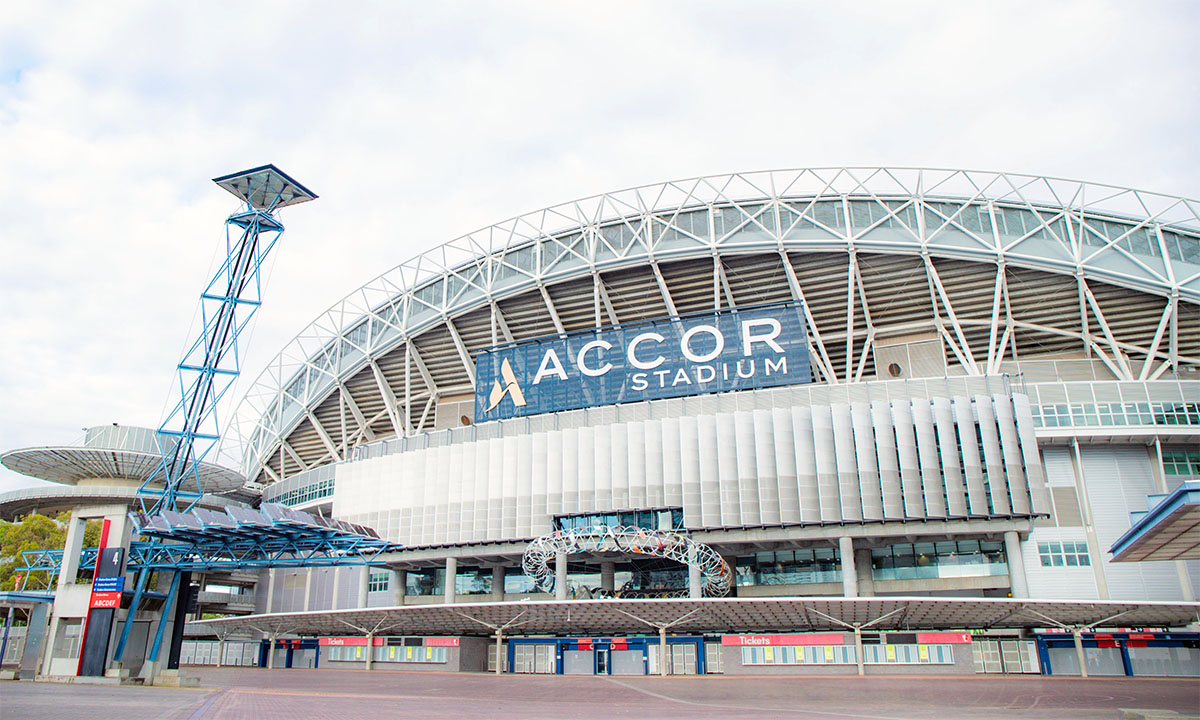
The venue opened as Stadium Australia in 1999, before it became Telstra Stadium in 2002 following its first naming-rights agreement. The ANZ Bank purchased the rights in an initial seven-year deal which was later extended, with the venue known as ANZ Stadium from January 1, 2008. It reverted back to its non-commercial name of Stadium Australia in December 2020 following the end of that partnership. Then as of 26 November 2021, the venue became Accor Stadium following a new seven-year deal with the global hotel chain.
Accor Stadium Details

Telstra Stadium
ANZ Stadium
Rugby Union
Football
South Sydney Rabbitohs (NRL)
2003 Rugby World Cup
2015 AFC Asian Cup
2023 FIFA Women's World Cup